
What is the Best Timber for a Gazebo on the Sunshine Coast?
The best timber for Sunshine Coast gazebos depends on your priorities for durability, aesthetics, and maintenance:
Premium Hardwood Options (Best for Longevity):
- Ironbark – Maximum durability for exposed coastal locations, exceptional termite and decay resistance
- Spotted Gum – Superior weather resistance with stunning grain patterns, ideal for subtropical conditions
- Blackbutt – Cost-effective hardwood offering excellent moisture resistance and attractive honey tones
- Merbau – Rich dark timber with natural oils providing superior weather protection
Key Considerations:
- Australian hardwoods naturally resist coastal humidity, salt air, and UV exposure
- Proper timber grading is necessary – use structural grade for posts/beams, appearance grade for visible elements
- Professional treatment and finishing systems are critical for coastal performance
- Marine-grade stainless steel fixings prevent corrosion in salt air
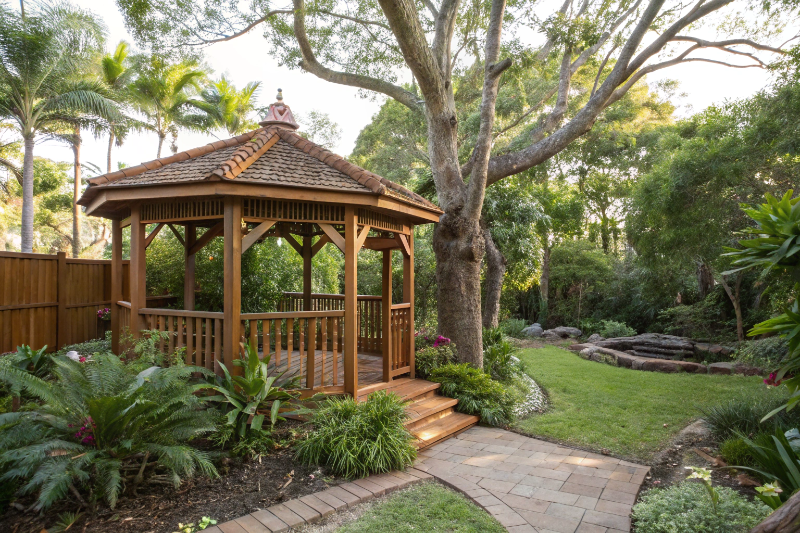

Australian Hardwood Selection for Sunshine Coast Gazebos
| Timber Species | Density | Durability Class | Colour Range |
|---|---|---|---|
| Spotted Gum | 1100 kg/m³ | Class 1 | Honey to red-brown |
| Ironbark | 1150 kg/m³ | Class 1-2 | Deep red-brown |
| Blackbutt | 900 kg/m³ | Class 2 | Pale honey |
| Merbau | 850 kg/m³ | Class 2 | Brown-red |
Timber Grading and Quality Selection
Not all hardwood is created equal, even within the same species. Timber grading separates the premium stuff from the rest, and understanding what you’re getting protects your investment.
Structural grade requirements come first. Posts, beams, and rafters need a minimum F17 hardwood grading to handle the loads they’ll carry. We don’t cut corners here—your gazebo’s structural members need to perform without question. Wind loads on the Sunshine Coast can be significant, and proper grading means your structure stands firm.
Appearance grade selection matters for everything you’ll see. Visible surfaces and decorative elements deserve timber that looks as good as it performs. We select appearance grades that minimise visual defects while maintaining the character you want.
Heartwood vs sapwood makes a real difference in durability and stability. Heartwood—the dense inner wood—gives you maximum performance. Sapwood—the outer growth—is lighter in colour but less durable. We specify heartwood for structural components and high-exposure areas.
Moisture content specifications need to match our climate. Timber at 12-15% moisture content is properly conditioned for Sunshine Coast installation. Too wet, and it’ll shrink after installation. Too dry, and it’ll absorb moisture and swell. Getting this right from the start prevents problems later.
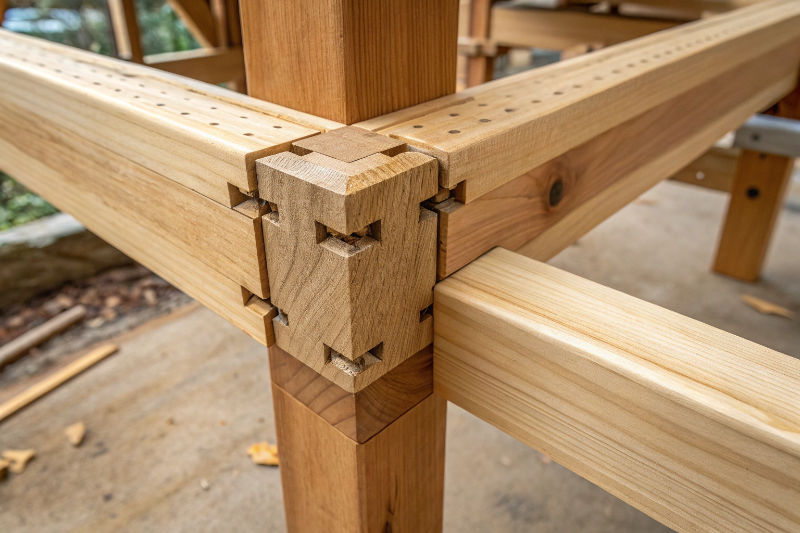
Traditional Craftsmanship and Joinery Techniques
Traditional joinery techniques create proven connections that have held structures together for centuries and still outperform modern shortcuts.
Mortise and tenon joints form the backbone of quality timber gazebo construction. These interlocking connections create superior strength without relying entirely on metal fasteners. When cut with accuracy, they lock together and strengthen over time as timber naturally compresses.
Dovetail construction appears in decorative elements and beam connections where strength and beauty matter. The wedge-shaped cuts resist pulling apart.
Housing and halving joints create flush surfaces where beams intersect. These joints let timber members sit perfectly level, creating clean lines and structural integrity.
Scarf joints extend timber lengths while maintaining strength and appearance, distributing loads across longer sections.

Modern Engineering Standards Applied to Traditional Methods
Traditional joinery looks beautiful, but it also needs to meet current building standards. We combine heritage techniques with modern engineering to create gazebos that satisfy both aesthetics and safety requirements.
Wind load calculations for the Sunshine Coast Region account for N2 wind classification—structures need to handle significant wind forces during storm events.
Foundation engineering provides the solid base that everything depends on. Minimum 450mm depth concrete footings give stability, adjusted for your specific soil conditions.
Lateral bracing prevents racking under wind loads while staying hidden or becoming decorative elements.
Building Code of Australia compliance means your gazebo meets Class 10a structure requirements for safety and legality.
Council permit requirements vary by size and location—we’ll guide you through what’s needed.
Design Integration and Garden Harmony
Architectural Style Coordination: Match your gazebo to your home’s architecture—whether Queenslander heritage with traditional fretwork, contemporary minimalist with clean lines, Colonial revival with ornate details, or resort-style for tropical settings.
Garden Integration and Landscape Enhancement: Position your gazebo for optimal views and privacy, integrate with mature trees, plan climbing plant structures, design natural pathway access, and incorporate lighting for evening ambience and year-round enjoyment.
Entertainment and Functional Design: Size your gazebo for intended use—from intimate 2.4m retreats to 4.8m entertainment spaces. Include built-in seating, outdoor kitchen coordination, ceiling fan provisions, and weather protection through proper roof design.

Construction Process and Quality Assurance
Site Preparation and Foundation Work: We assess drainage, soil type, and level requirements. Concrete footings with a minimum depth of 450mm (deeper for sandy coastal areas). Post anchoring systems handle cyclonic winds. Services location prevents utility damage during excavation.
Timber Preparation and Assembly: Components get milled and precision-cut in controlled workshop conditions. Pre-assembly dry fitting catches issues before final installation. A typical 3.6m × 3.6m timber gazebo takes 1-2 weeks from foundation to completion.
Finishing and Protection Application: Surface preparation includes sanding to 180-240 grit for a smooth finish. Penetrating oil finishes allow timber to breathe while providing moisture protection—ideal for coastal climates. Multiple coats with proper drying times.
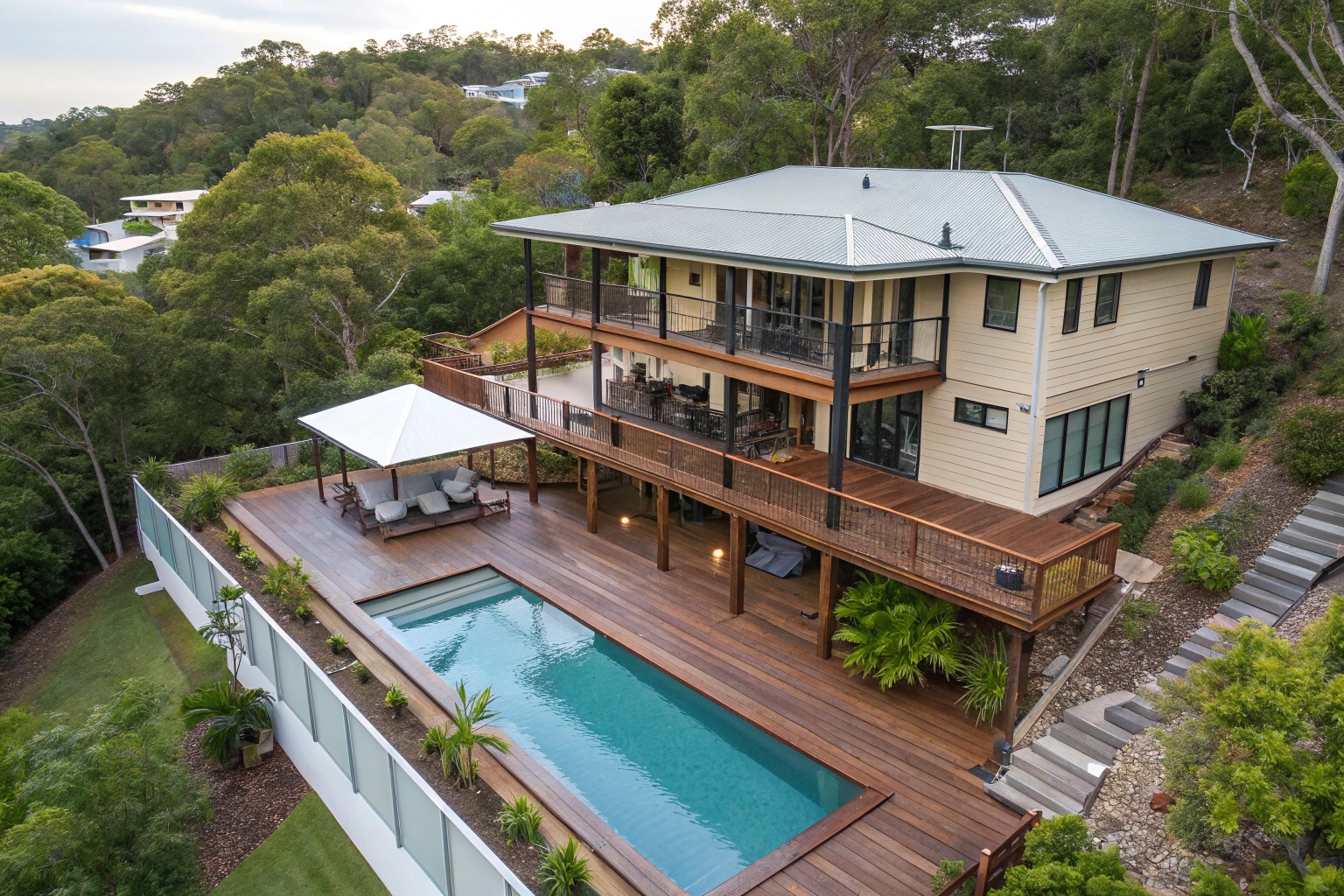
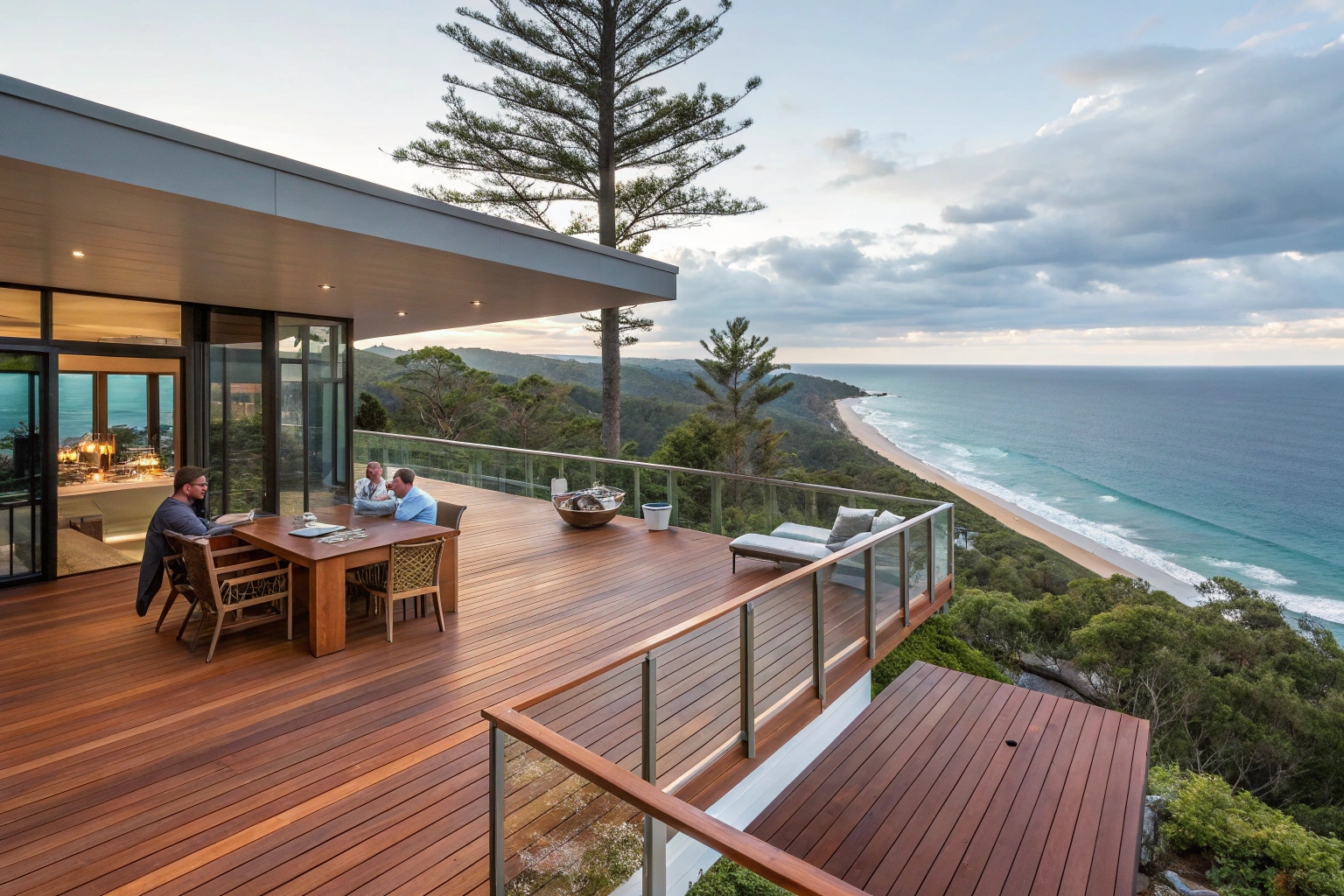

Long-term Performance and Maintenance
Coastal Climate Protection Strategies: Annual inspections check joints, fixings, timber condition, and finish integrity. Clean salt accumulation and organic growth regularly. Re-oil every 12-18 months for coastal locations. Simple maintenance preserves your investment.
Natural Aging and Character Development: Many Sunshine Coast homeowners embrace natural silver-grey patina as timber weathers beautifully in coastal gardens. You can maintain the original colour through regular re-oiling or allow natural aging.
Investment Value and Property Enhancement: Quality outdoor structures add 5-10% to property valuations. Outdoor entertaining spaces rank among the top buyer priorities in the Sunshine Coast real estate market.
Frequently Asked Questions About Timber Gazebo Building
With proper maintenance, a quality hardwood gazebo will easily last 30-50 years on the Sunshine Coast, and we’ve seen some go even longer. The key is choosing the right timber species from the start—Spotted Gum and Ironbark handle our coastal conditions brilliantly. We recommend re-oiling every 12-18 months to maintain the finish, but structurally, these Australian hardwoods are built to last generations. The timber actually gets stronger as it ages and settles into its environment.
It depends on the size and location. Smaller gazebos (under 10m² floor area and less than 2.4m high) often don’t require council approval if they meet setback requirements from boundaries. Larger entertainment structures definitely need permits. We’ll assess your specific situation during the site visit and guide you through the approval process if needed. We’ve done this hundreds of times, so we know exactly what the Sunshine Coast Regional Council looks for.
A gazebo has a solid roof that provides full weather protection—you can use it in the rain. A pergola has an open roof structure with beams and battens that create partial shade but let rain through. If you’re after year-round outdoor entertaining on the Sunshine Coast, a gazebo gives you that protection. Pergolas work great for creating filtered shade over pathways or areas where you want climbing plants to form a living canopy.
Pricing varies based on size, timber species, and design complexity. A basic 3m × 3m hardwood gazebo typically starts around $12,000-$15,000. Move up to premium species like Ironbark or add custom decorative elements, and you’re looking at $18,000-$25,000 for the same size. Larger 4.8m × 4.8m entertainment structures with built-in features can range from $30,000 to $45,000. We provide detailed quotes after assessing your site and understanding exactly what you want.
Absolutely—we do it all the time on the Sunshine Coast. Sloping blocks actually create opportunities for multi-level designs or elevated gazebos with beautiful views. The foundation work becomes more involved because we need to account for the slope and potentially build up footings to different heights, but that’s all part of our standard process. Some of our best projects have been on challenging sloped sites in Buderim and the Noosa hinterland.
Pretty straightforward, really. Wash it down with mild detergent a couple of times a year to remove salt buildup and any organic growth. Check the fixings annually—just a quick visual inspection to make sure nothing’s come loose. Re-oil every 12-18 months to maintain the finish and water protection. That’s about it. The maintenance is minimal compared to what you’d do for a deck because gazebos don’t cope with the same foot traffic and furniture wear.
Transform Your Outdoor Space with Handcrafted Timber Excellence
Ready to create the custom timber gazebo you’ve been dreaming about? At Decking Sunshine Coast Solutions, we bring together premium Australian hardwoods, traditional craftsmanship, and modern engineering to build gazebos that become the heart of your outdoor living space.
Our team serves homeowners throughout Caloundra, Maroochydore, Noosa, Buderim, Nambour, and across the Sunshine Coast region. Whether you’re envisioning an intimate garden retreat or a full-scale entertainment hub, we’ll guide you through every step—from initial design consultation to final finishing touches.
Contact Decking Sunshine Coast Solutions Today:
📞 Phone: 0753158346
📧 Email: info@sunshinecoastdecking.com
🕐 Hours: Monday-Friday 7 am-5 pm, Saturday 8 am-2 pm
