
What is the difference between a deck and a verandah?
A verandah and deck serve different purposes in Australian homes:
Verandah characteristics:
- Always includes a roof structure for weather protection
- Typically wraps around one or more sides of the building
- Traditional features of Queenslander and colonial homes
Deck characteristics:
- Elevated platform that can be covered or uncovered
- Usually built on stumps or posts above ground level
- More flexible in placement and design
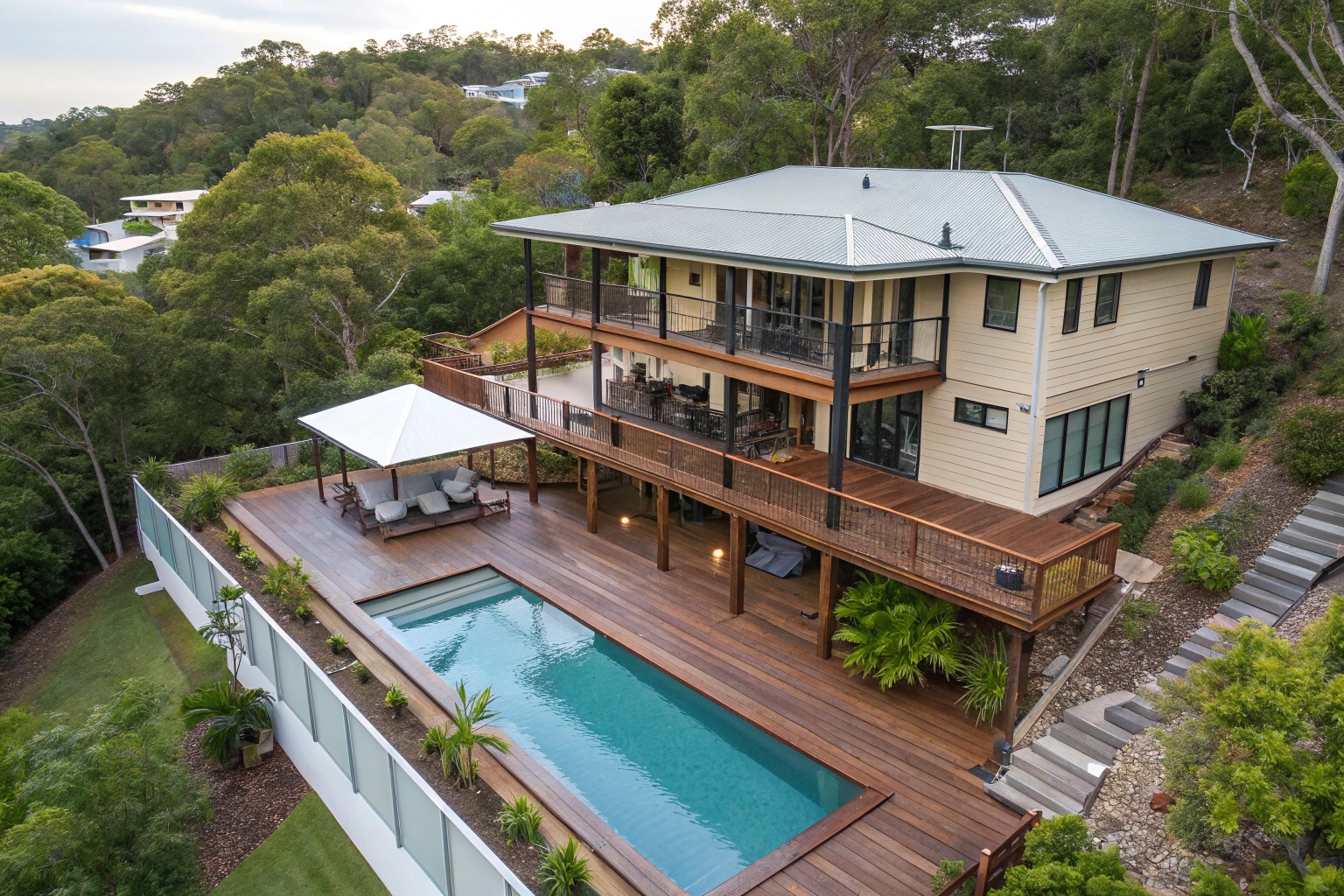
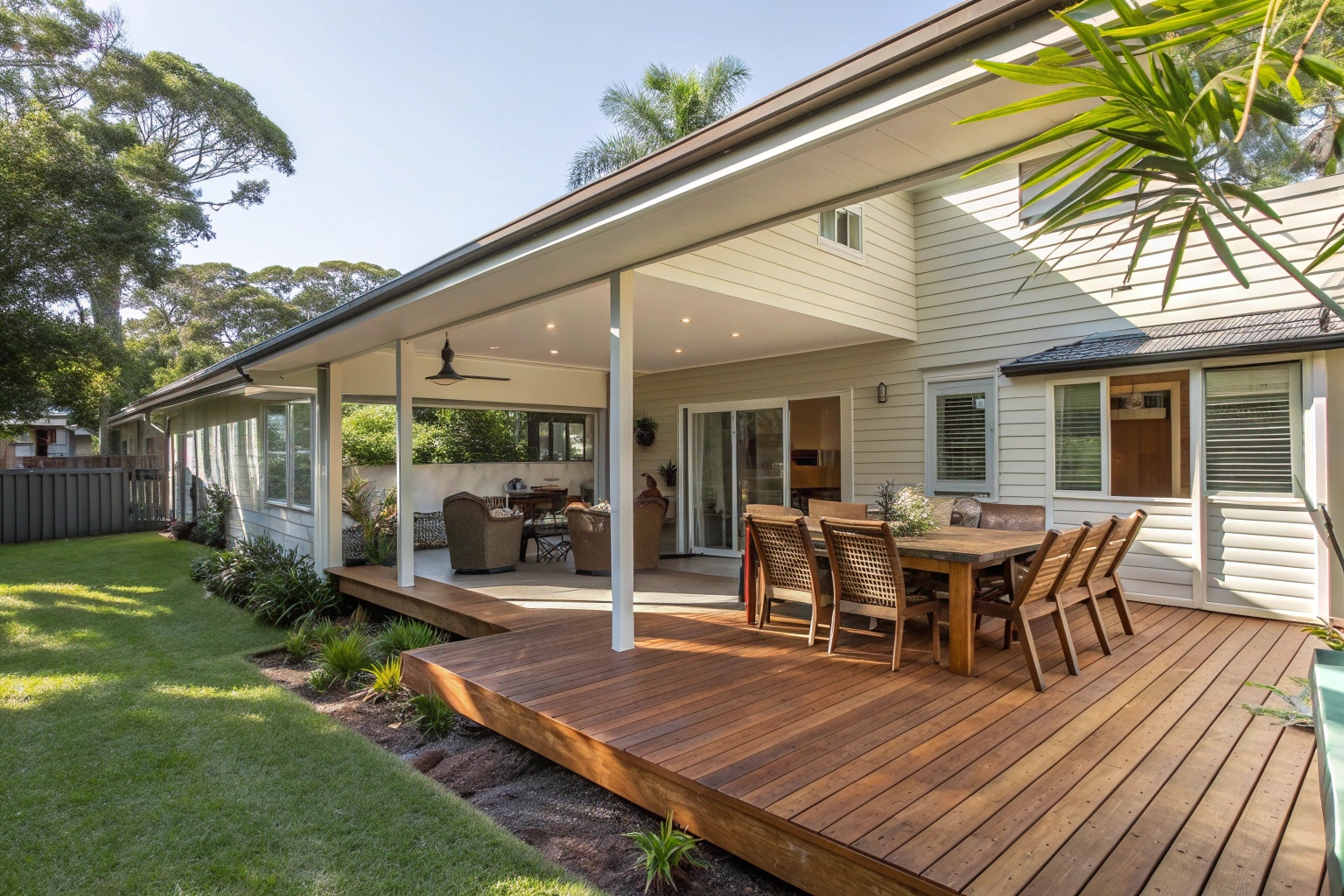
The key difference: verandahs are integrated, roofed structures providing shaded circulation space, while decks are elevated platforms primarily for entertaining. On the Sunshine Coast, many homeowners combine both—adding a covered verandah structure over an elevated deck platform for maximum weather protection and outdoor living functionality.
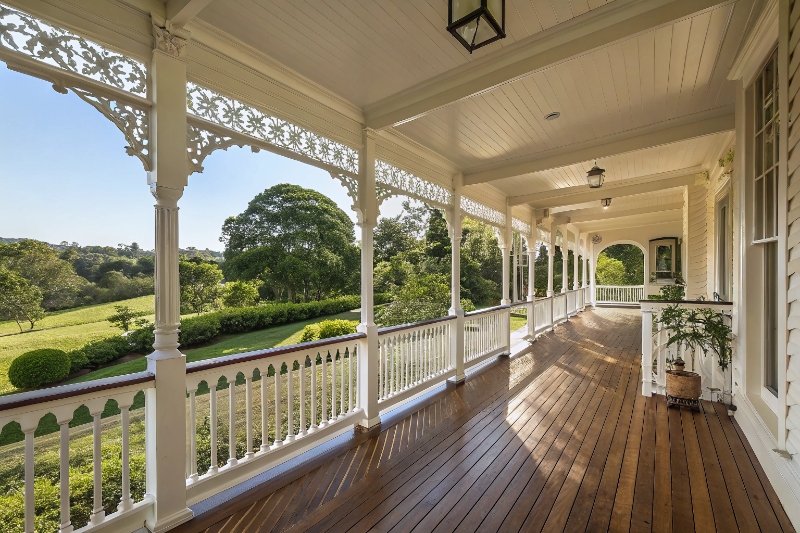

Traditional Queenslander Verandah Building
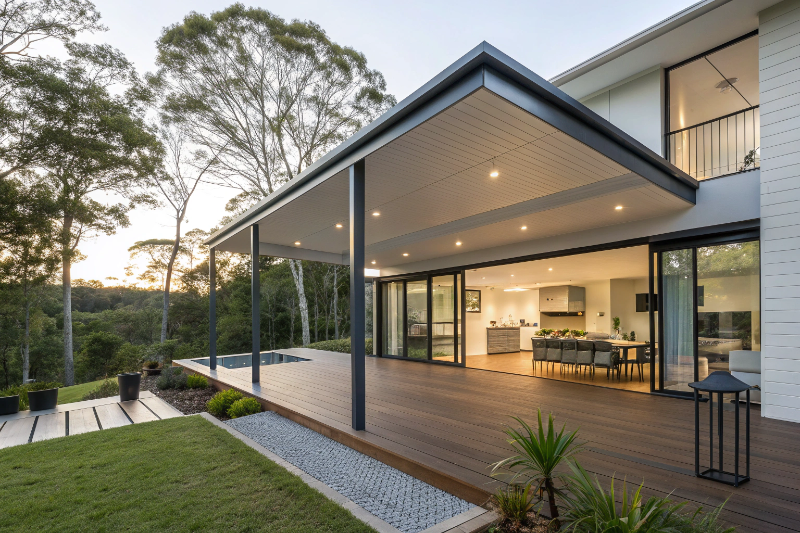
Contemporary Verandah Design and Construction
Modern Architectural Styles and Clean-Line Designs: Contemporary verandahs use minimalist details, steel posts, and floating rooflines while respecting traditional principles.
Multi-Functional Outdoor Living Spaces: We design verandahs for year-round entertaining with outdoor kitchens, built-in seating, and technology accommodation—lighting, ceiling fans, and power outlets.
Sustainable and Climate-Responsive Building: Passive cooling benefits matter in our subtropical climate. Solar-ready roof structures, FSC-certified timber, and low-VOC finishes reduce environmental impact while improving thermal performance.
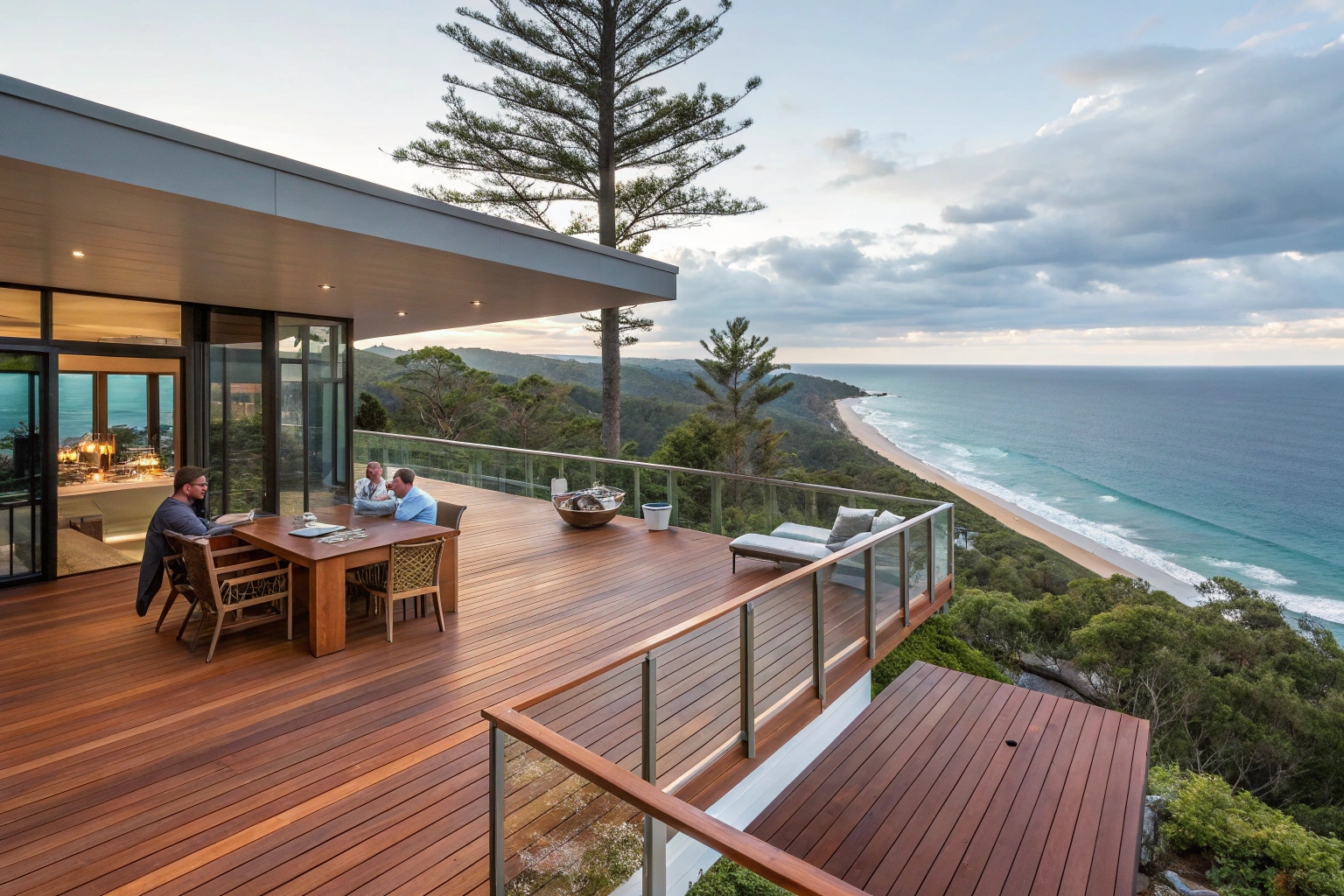
Engineered Solutions for Challenging Sites: Sloping blocks and elevated positions require cantilevered designs and long-span engineering. We calculate wind loads for exposed coastal locations and select foundation options based on soil conditions.

The Verandah Building Process on the Sunshine Coast
Initial Consultation and 3D Design Visualisation: We assess your property, discuss your vision, and analyse site conditions—slope, orientation, existing structures, access points. You’ll see 3D renders of your verandah before construction starts.
Council Permits and Structural Engineering: Some projects need development applications, others qualify as complying development. We handle structural engineering for wind loads, building certifier coordination, and complications like heritage overlays or boundary setbacks.
Construction and Quality Assurance: Site preparation through to final framework takes 4-8 weeks typically. We manage quality control checkpoints, weather contingencies during the wet season, and maintain safety standards throughout construction.
Final Inspection and Handover: Building inspection and certification complete the process. You’ll receive maintenance guidance for your specific materials, warranty information, and care instructions, including cleaning and sealing schedules.
Material Selection for Coastal Verandah Construction
Traditional Hardwood Options: Spotted gum, ironbark, and blackbutt offer natural durability in coastal environments. Properly maintained hardwood verandahs last 40+ years with regular oiling schedules.
Treated Pine and Engineered Timber: H3/H4 treated pine costs 40-50% less than hardwoods with termite protection. LVL and glulam beams handle structural loads. Lasts 20-25 years.
Composite and Low-Maintenance Alternatives: Composite decking and aluminium framework require virtually no maintenance. Higher upfront costs, lower lifetime expenses. Polycarbonate and Colorbond roofing available.
Roofing Materials and Weather Protection: Colorbond steel, terracotta, and concrete tiles suit different styles. Wind ratings required for coastal exposure. Insulation reduces subtropical heat transfer.

Frequently Asked Questions About Verandah Building
Most verandah projects take 4-8 weeks from council approval to completion. Timeline depends on design complexity, materials chosen, and weather conditions. We’ll give you specific timeframes during your consultation based on your project scope.
Depends on your property and verandah size. Some projects qualify as complying development, others need full development applications. Heritage overlay areas have additional requirements. We handle all council submissions and certifier coordination for you.
Hardwood costs more upfront but lasts 40+ years with maintenance. Composite costs 30-40% more than treated pine initially but requires virtually no ongoing maintenance. We’ll compare total lifetime costs during your consultation.
Yes, we specialise in heritage-appropriate verandah additions. We match existing fretwork, balustrades, post details, and architectural elements. For restoration projects, we source period-appropriate materials and use traditional joinery techniques.
Yes, we handle challenging terrain regularly. Cantilevered designs, engineered footings, and multi-level structures work for sloping properties. Site assessment determines the best structural approach for your block.
Maintenance depends on materials. Hardwood needs oiling every 12-18 months. Treated timber requires annual inspections and resealing every 2-3 years. Composite materials just need occasional washing. We provide specific care instructions for your verandah at handover.
Ready to Build Your Dream Verandah?
Get your free quote today—3D design visualisation included with every project. Our licensed builders service all Sunshine Coast suburbs with quality craftsmanship and council-approved construction.
Three Simple Steps to Your New Verandah:
- Free Consultation – We assess your property and discuss your vision
- 3D Design & Quote – See your verandah before we build, fixed-price quote provided
- Quality Construction – Licensed builders, council-approved, on-time completion
Contact us today: Phone: 0753158346 Service Areas: Caloundra, Maroochydore, Noosa, Buderim, Nambour
Start Your Verandah Project Today
